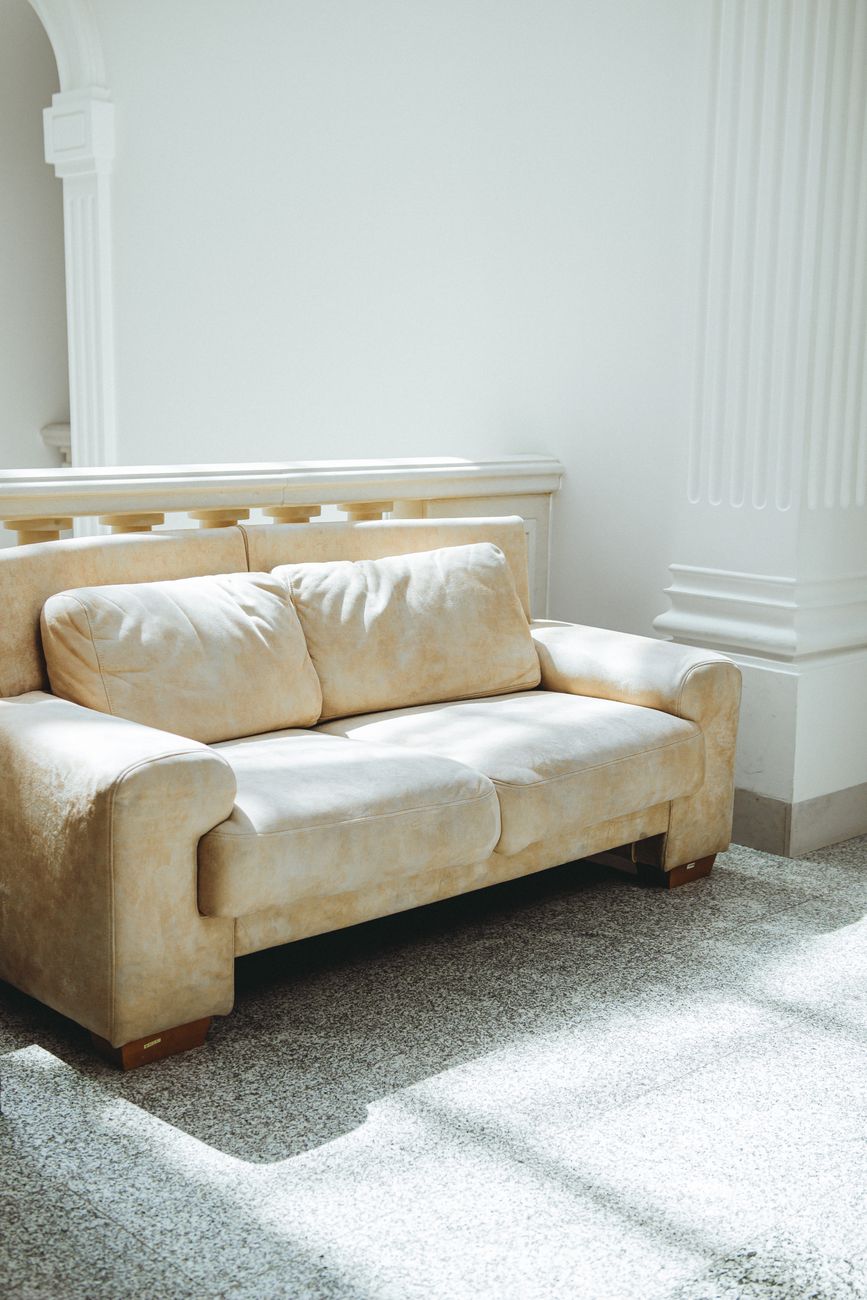
A six-piece Arhaus Coburn sectional lists at roughly $3,420 to $4,560 depending on configuration and fabric. A comparably sized modular sectional from a direct-to-consumer brand lists closer to $800 to $1,900. The instinct is to treat that gap as brand markup — and some of it is. But a meaningful share of that gap is also frame construction, spring suspension, and fill quality, three things that don’t show up in a product photo and rarely show up in the marketing copy either. This piece is the argument for checking those three things directly, on any sectional, before deciding which price tier actually earns its cost.
What actually determines a sofa’s lifespan

A sofa fails in one of three places, and only one of them is visible when the piece is new:
- Frame material. Kiln-dried hardwood (oak, poplar, ash) holds joints and screws for decades. Particleboard, plywood composite, or unlabeled “engineered wood” frames — common below a certain price point — swell, crack, and lose screw-holding strength within 5-8 years of normal use. The frame is almost never visible on a showroom floor or a product page; it has to be asked about or found in the spec sheet.
- Suspension system. Eight-way hand-tied springs (the traditional high-end standard) or a well-executed sinuous-spring-plus-webbing system both distribute weight and resist sagging for 15-20+ years. A sofa built on stapled webbing alone, with no spring layer, will develop a visible seat dip within 3-5 years of daily use — this is the single most common reason a “comfortable at the store” sofa becomes “sunken after two years” at home.
- Fill and fabric. High-resiliency (HR) foam or a down-blend cushion holds its loft for 8-12+ years; standard polyfoam compresses and loses shape within 2-4 years. Fabric performance is measured by Wyzenbeek double-rubs — a household with regular use (kids, pets, daily sitting) should look for 15,000+ double-rubs; anything under 10,000 is a light-use fabric being asked to do heavy-use work.
None of these three show up in a showroom sit-test. A sofa can feel identical to another sofa on day one and diverge completely by year three, purely on construction that isn’t visible.
Reading Arhaus specifically
Arhaus discloses more construction detail than most mid-market furniture retailers — solid hardwood frames and, on many upholstered pieces, an 8-way hand-tied or comparable spring system are named on the product page rather than buried in a spec PDF. That disclosure is itself informative: brands confident in their frame and suspension tend to name the construction; brands that don’t name it are usually using a lower construction tier, whether or not that’s disclosed outright.
The trade-off is price. A Coburn Three-Piece Modular Sofa lists at roughly $2,900, and the six-piece configuration runs $3,420-4,560 depending on fabric and layout. That’s real money, and the honest question is whether it buys proportionally more longevity than a $780-1,900 alternative, or whether some of that gap is retail markup, showroom overhead, and brand premium that doesn’t map to construction quality at all.
Three sectionals, three tiers
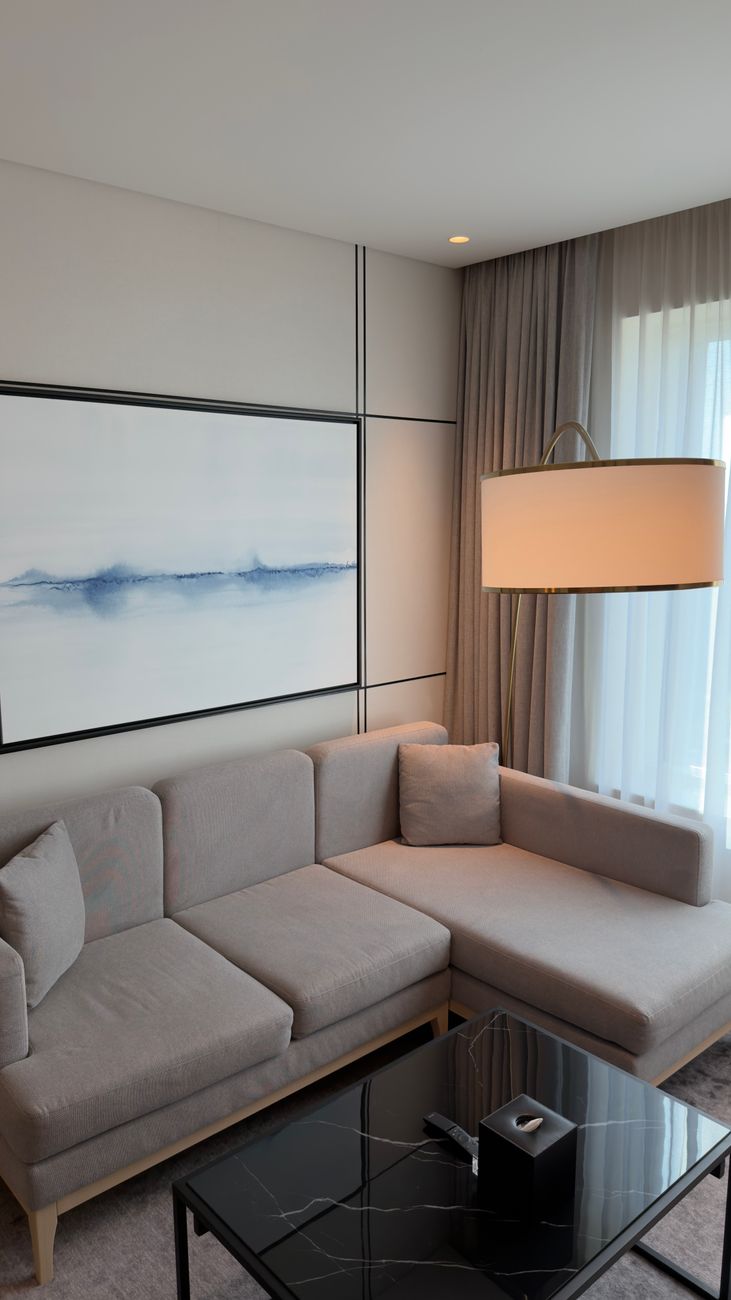
The Nomad’s honest pitch is modularity and a legitimate CertiPUR-US-certified foam fill over a precision-milled wood frame — not solid hardwood throughout, but a disclosed, tested foam and a named frame process rather than an unnamed composite. For a household expecting to move within 3-5 years, or a first sectional bought with a tighter budget, this is a real recommendation, not a strawman entry tier. The trade-off is a shorter realistic service life — call it 5-8 years of daily use before the foam loses meaningful loft — and stain-resistant fabric rather than a heavier-duty performance weave.
Interior Define’s Sloan line solves the entry tier’s main weakness — it’s fully custom (size, fabric, cushion fill, leg finish), which means the fill and fabric performance rating can be upgraded independently of the base frame price. Real-world buyer pricing for a 3-seat chaise configuration runs close to $3,140 before delivery once customized toward the higher-durability end, which narrows the gap to Arhaus considerably — the mid tier here is less about being cheaper than the heirloom option and more about paying only for the specific upgrades that matter to your household (kids and pets versus a formal, low-traffic room).
The Coburn’s case is the kiln-dried hardwood frame and named spring construction, sized for a household planning to keep the piece 15-20+ years, ideally with a fabric reupholster somewhere around year 10-15 rather than a full replacement. At six-piece configurations running $3,420-4,560, the per-year cost over a 20-year span is $171-228 — competitive with, and in some configurations lower than, replacing a $780 sectional every 5 years ($156/year in pure sticker cost, before counting five separate delivery fees and five sectionals’ worth of landfill).
The comparison table
| Nomad (entry) | Sloan (mid) | Coburn (heirloom) | |
|---|---|---|---|
| Starting price | $780 | ~$1,400-3,140 (configured) | $3,420-4,560 |
| Frame | Precision-milled wood | Hardwood, spec varies by config | Kiln-dried hardwood |
| Fill | CertiPUR-US foam | Configurable — foam to down-blend | High-density foam / down-blend option |
| Realistic service life | 5-8 years | 10-15 years | 15-25 years |
| Approx. cost per year | $98-156 | $93-314 (config-dependent) | $137-228 |
| Best fit | Renters, first sectional, 3-5 year horizon | Households wanting to tune durability to budget | 15+ year households, willing to reupholster once |
The heirloom tier does not automatically win on cost-per-year — the mid tier, configured toward the durable end, can land in the same range or better. The honest recommendation depends on how long you actually plan to keep the piece, which is a household-specific answer, not a universal one.
Frequently asked questions
Is Arhaus furniture actually worth the price? For solid-hardwood-frame, kiln-dried pieces with 8-way hand-tied or comparable seat construction, yes, if you plan to keep the piece 10+ years — the frame and suspension outlast the fabric, which can be reupholstered. For pieces where the frame material isn’t disclosed on the product page, treat the price the same way you’d treat any unlabeled furniture: assume mid-tier construction and price it against that, not against the Arhaus name.
What should I check before buying any sectional, not just Arhaus? Frame material (kiln-dried hardwood beats particleboard or unspecified “engineered wood”), seat construction (8-way hand-tied springs or high-density foam over webbing beats loose foam blocks), fill (down-blend or high-resiliency foam beats standard polyfoam for long-term shape retention), and fabric performance rating (look for a Wyzenbeek double-rub count above 15,000 for a household with regular use).
How long should a good sofa actually last? A well-built sofa frame — kiln-dried hardwood, properly joined — should outlast several fabric lives, which puts realistic total service life at 15-25 years with one or two reupholsters. A sofa that needs full replacement at year 5-7 typically failed at the frame or spring level, which is a construction problem, not a wear problem.
Are budget sectionals from Burrow or similar direct-to-consumer brands a reasonable alternative? For a shorter ownership horizon (apartment renters, a first sectional, a household expecting to move in under 5 years), yes — a modular, lower-cost sectional with replaceable covers can be the more rational buy, because you’re not paying for 20-year construction you won’t use for 20 years. The tier only matters relative to how long you actually plan to keep the piece.
What’s the honest case against always buying the most expensive option? Price correlates with construction quality only loosely once you’re past a baseline (kiln-dried frame, real spring or high-density foam suspension). Above that baseline, a large share of additional price is brand markup, retail floor-space cost, and fabric choice — not additional durability. The baseline is the thing worth paying for; everything past it is a design and comfort preference, not a longevity one.
Read next
- The case against more — the editorial position behind the three-tier framework used here.
- The Repairative Moisturizer question — the same cost-per-year argument, applied to skincare.
- Disclosure and editorial standards — the full economic disclosure.